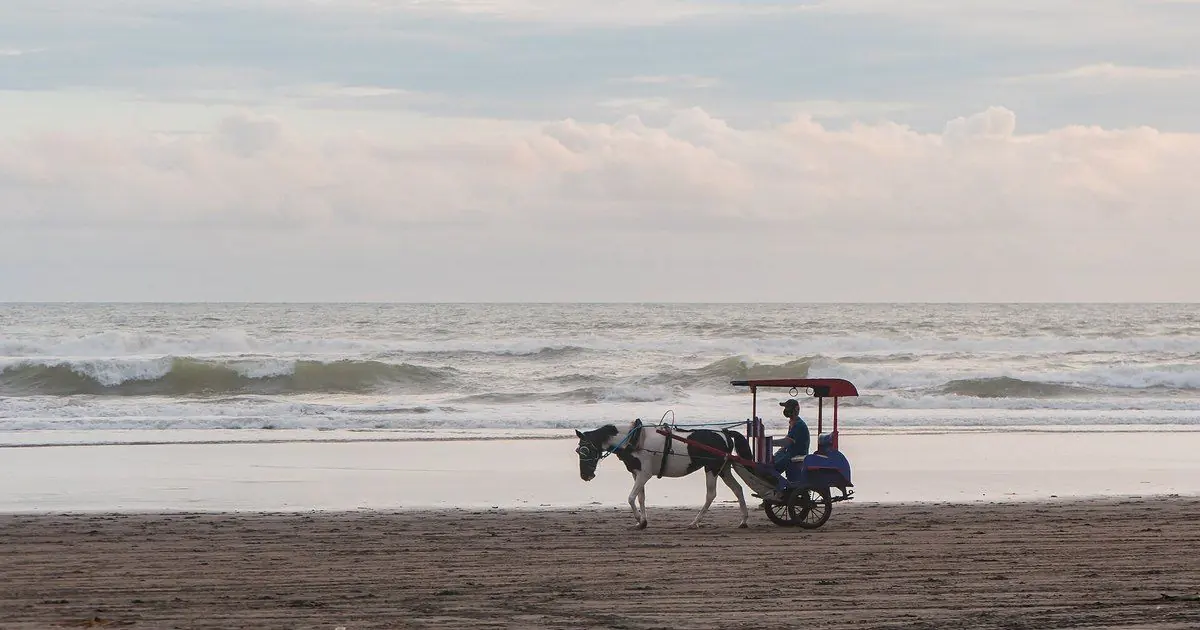
Yogyakarta is unusually well placed for nature. Within two hours of the city you can be in a pine forest on a hill, standing under a waterfall, or on a limestone beach facing the Indian Ocean.
The mistake is trying to do all three in one day. They sit in different directions, and the roads between them are slow.
The Four Directions
North — Merapi and Kaliurang. Volcanic slopes, cooler air, pine forest, and viewpoints towards the mountain. About 25 to 40 minutes from the centre.
South — Bantul and the coast. Rice fields giving way to sand dunes and long beaches. Parangtritis is the closest and busiest; the quieter stretches are further west.
South-east — Gunungkidul. Limestone hills, caves, and a coastline of small bays with dramatic rocks. Farther and slower to reach, but the scenery is the most distinctive in the region.
West — Kulon Progo. Hills, waterfalls, and the Menoreh range. Less visited, and the roads are narrow.
Waterfalls
The waterfalls are at their best in the wet season, roughly November to March, when the flow is strong. In the dry season some reduce to a trickle.
Practical points:
- Paths get slippery; wear shoes with grip
- Go early — rain tends to arrive in the afternoon
- Check locally whether a site is open; some close after heavy rain
- Bring a change of clothes if you plan to swim
Hills and Viewpoints
The hill country north and west of the city offers cooler air and long views. Dawn is the best hour; by mid-morning the haze softens the distance.
Sunrise viewpoints usually require leaving the city around four in the morning. Arrange transport in advance — ride-hailing is scarce at that hour.
The South Coast
The coast is beautiful and dangerous in equal measure. The surf is strong, there are currents, and swimming is not recommended at most beaches.
What to do instead: walk the sand, watch the fishing boats, eat seafood, and stay for sunset. Several beaches have safe areas for wading, but ask locally before entering the water.
When to Come
| Season | What it means | Best for |
|---|---|---|
| Dry (April–October) | Clear skies, dry paths | Coast, viewpoints, temples |
| Wet (November–March) | Green landscape, afternoon rain | Waterfalls, rice fields |
What to Bring
- Shoes with grip
- Water and a hat
- Cash — many sites have no card payment
- A light rain jacket
- A power bank; signal and battery drain fast in the hills
Nature near Yogyakarta is not a single destination. Pick one direction, leave early, and let the day be slower than the map suggests.
Frequently asked questions
What is the closest nature trip from Yogyakarta? The Bantul coast and the Merapi slopes are both about 30 to 45 minutes from the centre.
Can I swim at the beaches? At most beaches, no — currents are strong. Ask locally about specific spots.
When is the best season for waterfalls? The wet season, roughly November to March, when the flow is strongest.
Frequently asked questions
What is the closest nature trip from Yogyakarta?
The Bantul coast and the Merapi slopes are both roughly 30 to 45 minutes from the city centre.
Can I swim at the south coast beaches?
At most beaches, no. Currents are strong. Ask locally about specific spots before entering the water.
When is the best season for waterfalls?
The wet season, roughly November to March, when the flow is strongest.