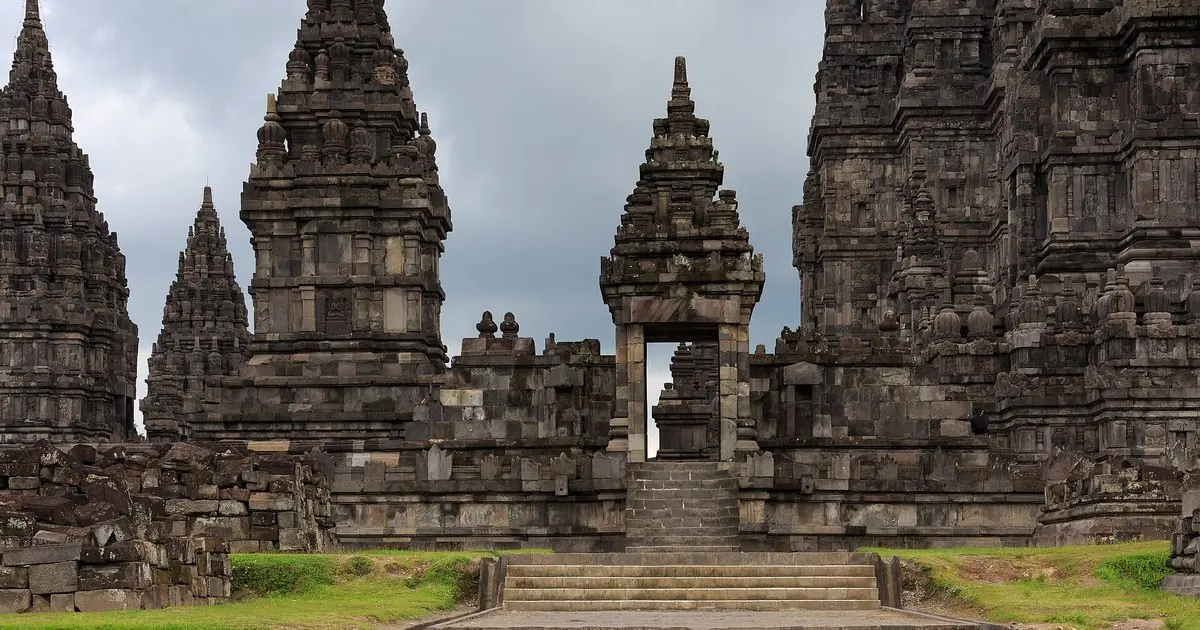
Prambanan is on almost every Yogyakarta itinerary, yet plenty of visitors leave with two impressions at once: awe and exhaustion. The compound is large, the sun is unforgiving by mid-morning, and the wrong order of walking turns half the visit into backtracking.
This guide sets out how to see Prambanan comfortably: when to arrive, a route through the site that actually flows, and the mistakes first-time visitors make most often.
What Prambanan Is, and Why It Feels Different
Prambanan is a ninth-century Hindu temple compound on the border between Yogyakarta and Central Java, roughly 17 kilometres east of the city. It is a UNESCO World Heritage site, and its skyline is dominated by three towering temples dedicated to Shiva, Vishnu and Brahma.
What sets it apart is not only scale but layout. There is a dense inner zone of large temples, then hundreds of smaller shrines scattered around them. Visitors who stop at the Shiva temple and turn back miss the quietest part of the site: the rows of small shrines on the outer platform.
In the evening the compound also hosts a Ramayana ballet performance on an open-air stage. Many travellers come twice in one day, once for the stone and once for the story.
When to Arrive
Two windows make the most sense, and each gives a different experience.
Early morning, as the gates open. The air is still cool, the light comes in from the side, and coach groups have not arrived. This is the best time to photograph the temples without a crowd in the foreground. To get there early, staying near Prambanan or leaving the city before sunrise makes far more sense than forcing a mid-morning start.
Late afternoon, about two hours before closing. The heat drops, the stone turns golden, and the mood is calmer. The trade-off is that some sections fill up again as other visitors have the same idea.
What to avoid: arriving at midday in the dry season. Stone holds heat, and the open ground between temples reflects it. If you have no choice, finish the inner zone first and then retreat to the shaded areas.
A Route That Does Not Wear You Out
The order below avoids backtracking and puts your rest stops where you actually need them.
| Stage | Where | Note |
|---|---|---|
| 1 | Entrance and ticket area | Pick up a map, check the ballet schedule if you plan to stay |
| 2 | Shiva temple and the main group | Climb the steps once, do not go up and down repeatedly |
| 3 | Vishnu and Brahma temples | Walk clockwise so you are not fighting the flow of visitors |
| 4 | Outer shrines | The quietest section, good for sitting down |
| 5 | Museum and exhibition area | Shade, plus the historical context in one place |
The logic is simple: finish the inner zone while you still have energy, then move to the outer, shadier areas. Many people do the opposite, walking the perimeter first and arriving at the main temples too tired to climb.
If you are carrying a camera, the northern side of the compound gives you a cleaner sky behind the temples in the afternoon. For other photo locations around the city, see our guide to aesthetic photo spots in Yogyakarta.
The Mistakes That Come Up Most
Assuming half an hour is enough. The compound needs at least two hours if you want both the inner and outer zones without rushing.
Wearing the wrong shoes. The temple steps are steep and the stone is rough. Sandals work, but rubber-soled shoes are far more comfortable.
Arriving without water. Sellers exist inside the complex, but prices differ from outside and they are not always near the main temples.
Skipping the information boards. Details about the Ramayana reliefs and the function of each temple sit on small panels that most visitors walk straight past.
Cramming too much into one day. Prambanan plus Borobudur plus Malioboro is technically possible, but the result is not a visit — it is a sequence of car parks.
What to Bring
- Enough water, at least one bottle per person
- A hat or a folding umbrella, especially after mid-morning
- Rubber-soled shoes
- Cash for parking, guides, or snacks outside the gates
- A power bank, because photographing outdoors drains a battery quickly
If you want the history without reading every panel, hiring a local guide is worthwhile. Rates vary and are usually negotiable at the gate, so ask what the tour covers and how long it runs before you start.
"This temple is not only about big stones. There is a story in every relief, and it only appears when you stop for a moment," a guide at Prambanan told visitors asking about the Ramayana panels.
Pairing Prambanan With Somewhere Else
Prambanan makes sense with places in the same direction, not with Malioboro on the opposite side of the city. Two combinations work well:
- Prambanan, then Ratu Boko — same hill area, and a good way to end the day with the city spread out below you.
- Prambanan, then the Gunungkidul coast — only realistic if you start very early and drive yourself.
For a full two-day plan, our two-day Yogyakarta itinerary sets out an order that has been tested. If you plan to drive yourself, read renting a motorbike in Yogyakarta before you book.
Ending the Visit Calmly
Most visitors rush out the moment they have photographed the main temples. The better part comes afterwards: sitting on the outer platform, watching the rows of small shrines, letting your eyes adjust to the scale of the place.
If you are there in the late afternoon and want to see the Ramayana ballet, allow extra time — the performance runs into the evening. Tickets are separate from temple admission, so decide early whether you are staying or heading back after sunset.
Frequently asked questions
Can Prambanan and Ratu Boko be visited in one day? Yes. They are close together, and many visitors finish Prambanan first and then drive up to Ratu Boko in the afternoon.
Do I need a guide? Not compulsory, but helpful if you want to understand the Ramayana reliefs. Local guides usually offer their services near the entrance.
Is Prambanan suitable for small children? Yes, with water and without forcing every climb. The outer areas are easier for children because the ground is flatter.
Frequently asked questions
Can Prambanan and Ratu Boko be visited in one day?
Yes. They are close together, and many visitors finish Prambanan first and then drive up to Ratu Boko in the afternoon.
Do I need a guide at Prambanan?
Not compulsory, but helpful if you want to understand the Ramayana reliefs. Local guides usually offer their services near the entrance.
Is Prambanan suitable for small children?
Yes, with water and without forcing every climb. The outer areas are easier for children because the ground is flatter.