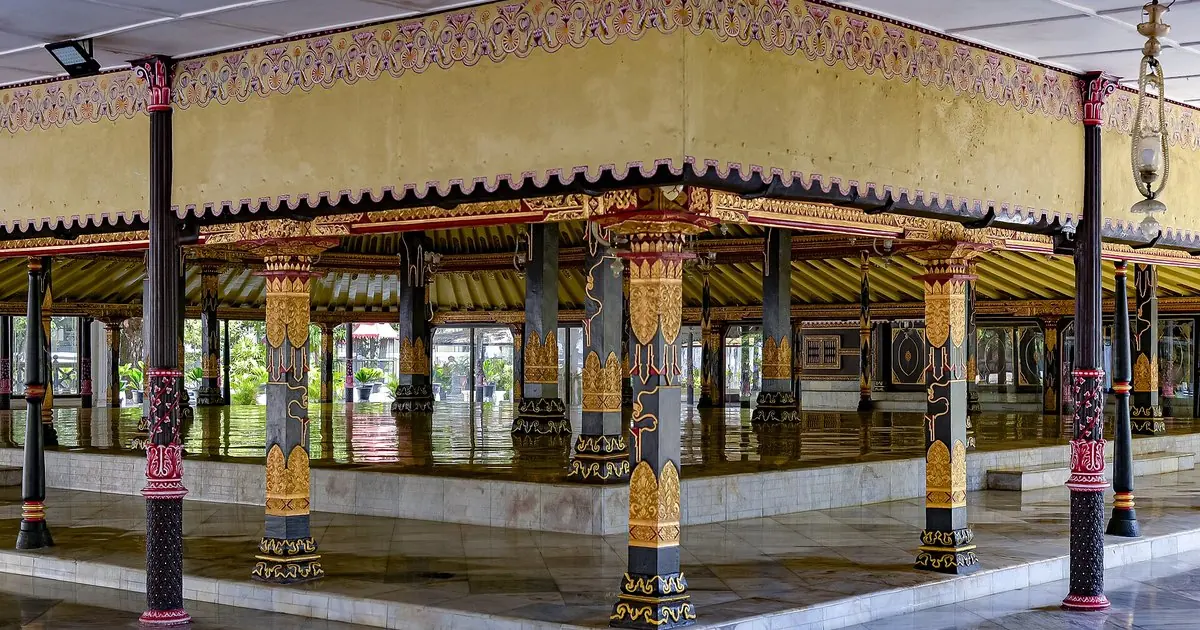
The Kraton is not a museum built for visitors. It is a working palace, home to the Sultan of Yogyakarta and his court, and part of it is open to the public.
That distinction explains most of what surprises people: the limited opening hours, the sections that are closed, and the guides who offer something slightly different from what the palace actually offers.
What the Kraton Is
The palace complex sits at the southern end of the Malioboro axis, in a walled compound with pavilions, courtyards and a small museum. The architecture mixes Javanese and colonial elements, and the layout follows a symbolic north–south line from the volcano to the sea.
Inside, you can see the pavilions where court ceremonies take place, a collection of gifts from foreign delegations, gamelan instruments, and the palace guards in traditional dress.
Tickets and Hours
The palace is generally open in the morning and closes in the early afternoon, and it closes entirely on certain ceremonial days. Hours change, so check before travelling across the city.
Buy tickets at the official counter. This is the single most useful piece of advice in this guide.
The Scam to Recognise
Outside the entrance, you may be approached by someone claiming the palace is closed today, or that the official ticket office has moved, and offering to take you instead to a "better" batik gallery, a "royal" workshop, or a "special" performance.
In practice, these are commission-driven detours. The palace is not closed, the ticket office has not moved, and the gallery is a shop.
Two rules:
- Walk to the official entrance and check for yourself
- Do not accept a "free" guide who appears outside the gate
What to See Inside
- The main pavilions — large open halls with carved pillars
- The museum rooms — gifts, photographs, and court objects
- The gamelan sets — instruments played for ceremonies
- The guards — in traditional dress, particularly in the morning
- The courtyards — quiet corners away from the main flow of visitors
Allow an hour and a half. The complex is not huge, but the heat makes rushing unpleasant.
Dress and Behaviour
Dress modestly — shoulders and knees covered. Sandals are fine, but you will be walking on stone and gravel.
Inside the palace, do not climb on structures, do not touch the gamelan, and ask before photographing people. Some areas are closed for ceremonies; the guards will tell you.
Combine It With Taman Sari
Taman Sari, the water castle, is a short walk or ride away. It was built as a pleasure garden and bathing complex, and the surviving pools and underground passages are worth an hour.
Go to the Kraton first, while it is cooler, then Taman Sari.
Getting There
The palace is at the southern end of Malioboro, walkable from the street's lower end. A becak or ride-hailing car is easier if you are coming from further north.
| Site | Time needed | Best time |
|---|---|---|
| Kraton | 1.5 hours | Morning |
| Taman Sari | 1 hour | Late morning |
| Alun-alun Kidul | 45 minutes | Evening |
| Malioboro | 2 hours | Evening |
The palace rewards people who slow down. The courtyards are the point, not the photo at the gate.
Frequently asked questions
Is the Kraton open every day? No. It closes on certain ceremonial days and usually only opens in the morning, so check the schedule before you go.
Where do I buy tickets? At the official ticket counter inside the entrance. Ignore anyone outside offering to sell you a ticket or claiming the palace is closed.
Can I visit Taman Sari on the same day? Yes, it is close by. Do the Kraton first, then Taman Sari.
Frequently asked questions
Is the Kraton open every day?
No. It closes on certain ceremonial days and generally opens only in the morning. Check the schedule before travelling.
Where do I buy Kraton tickets?
At the official ticket counter at the entrance. Ignore anyone outside claiming the palace is closed or selling tickets.
Can I visit Taman Sari the same day?
Yes, it is close by. Visit the Kraton first, then Taman Sari.